

BAMBOO WHISK SET FOR MATCHA BREWING
Bamboo Whisk Set for Matcha Brewing - Traditional, Handmade, Essential
A complete bamboo tool set for preparing all Estradora powdered teas the authentic way (Matcha, Hojicha, Genmaicha, Wakoucha). Perfect for daily rituals, ceremonial use, or thoughtful gifting.
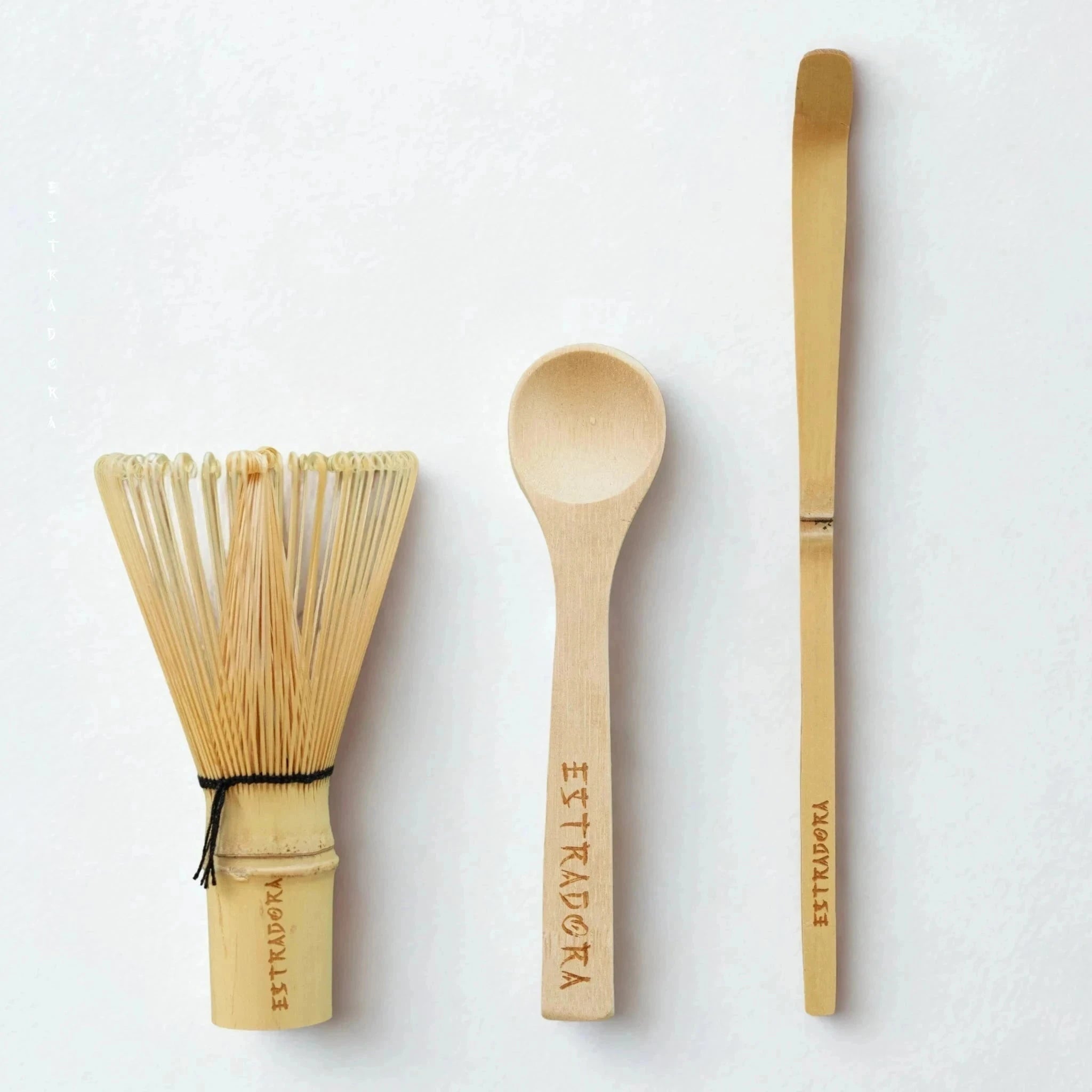
Set includes:
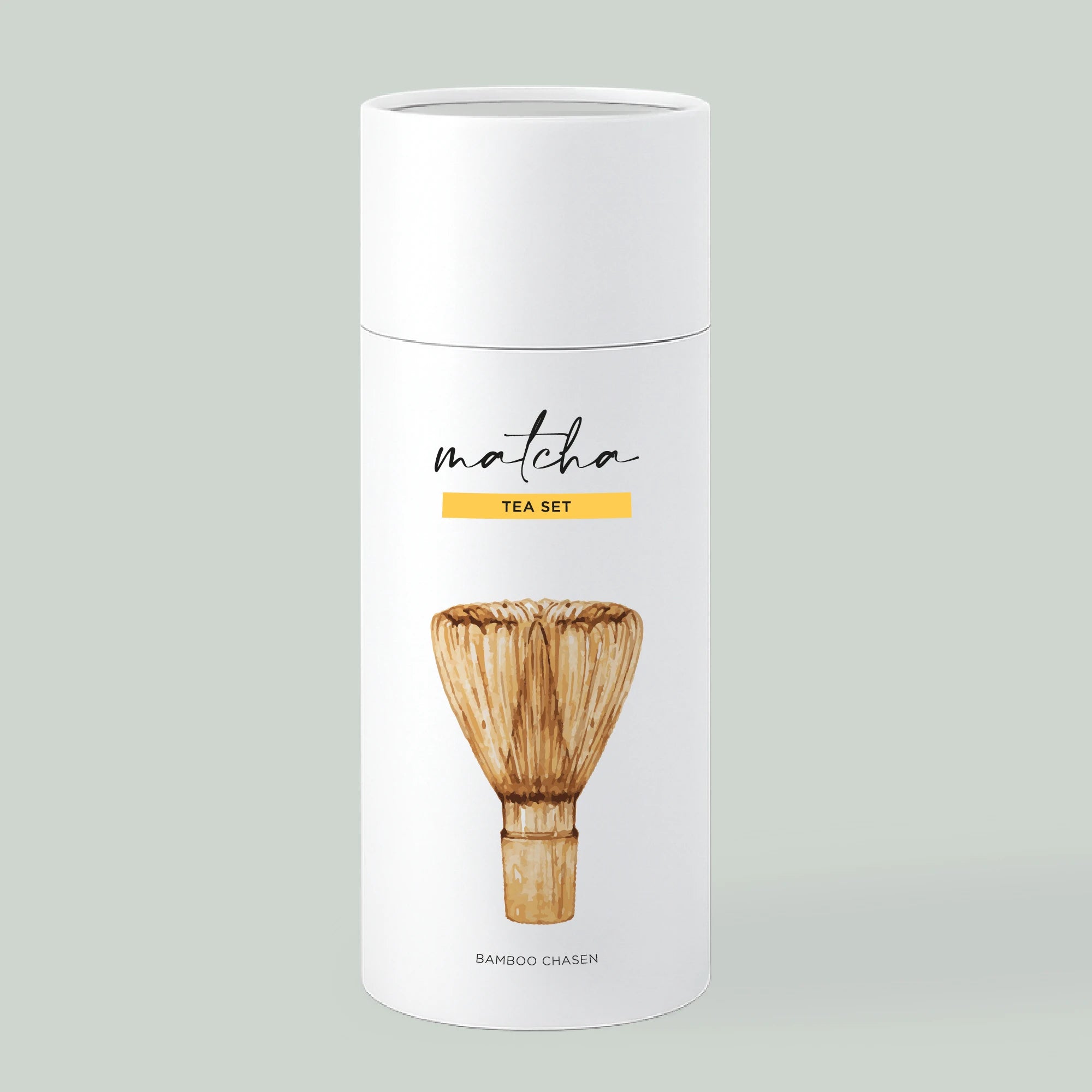
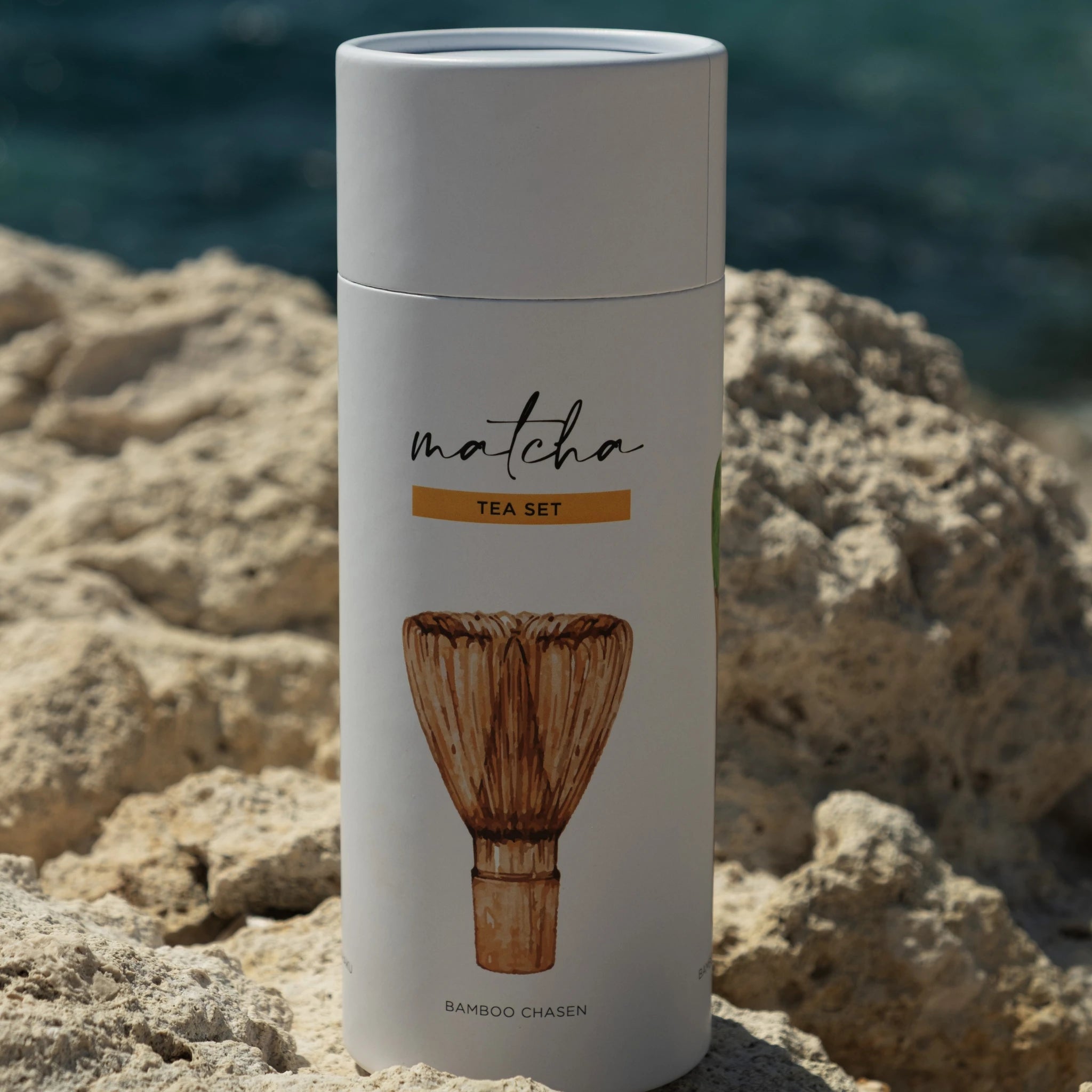
- Branded tube - perfect for whisk storage, gifting and safety during transportation;
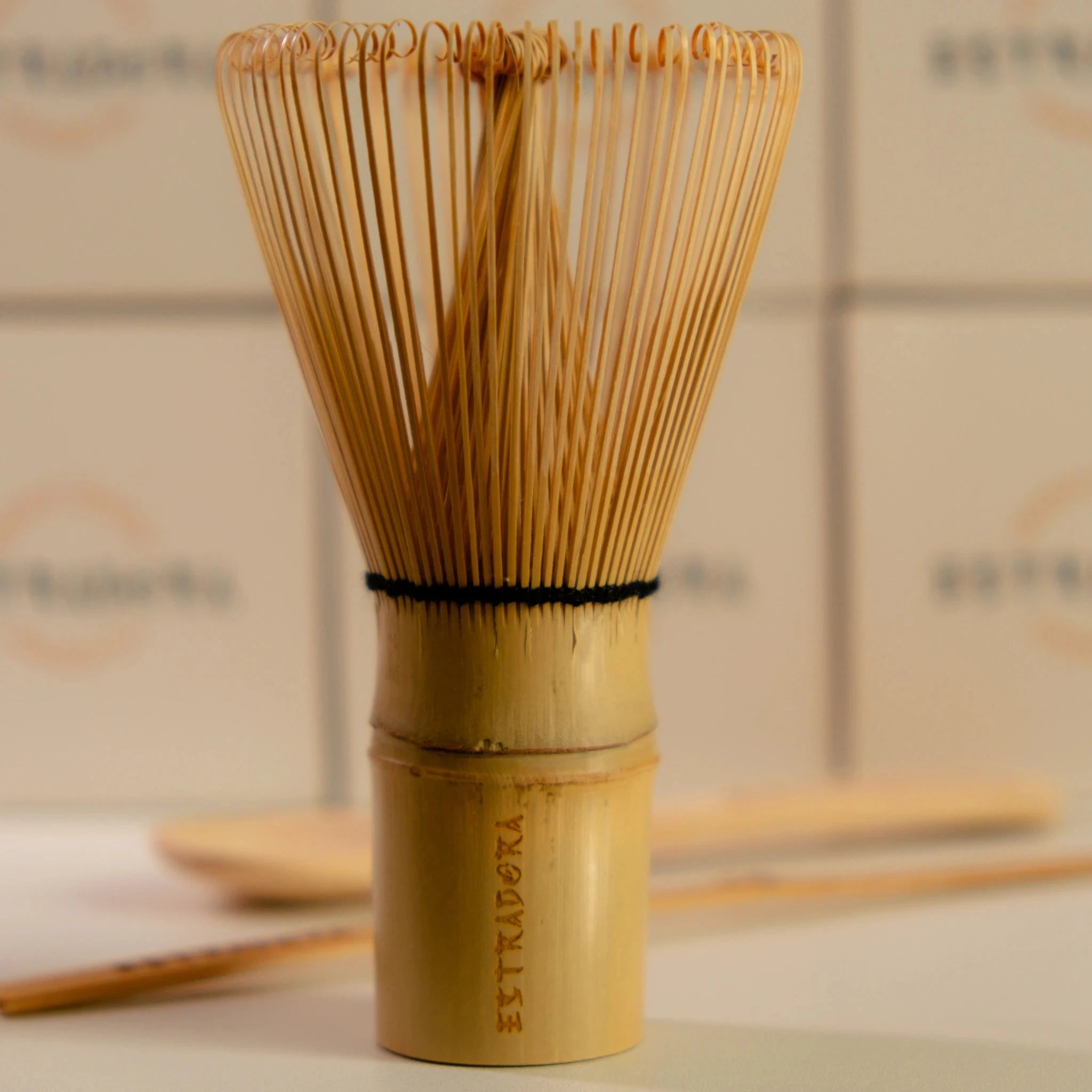
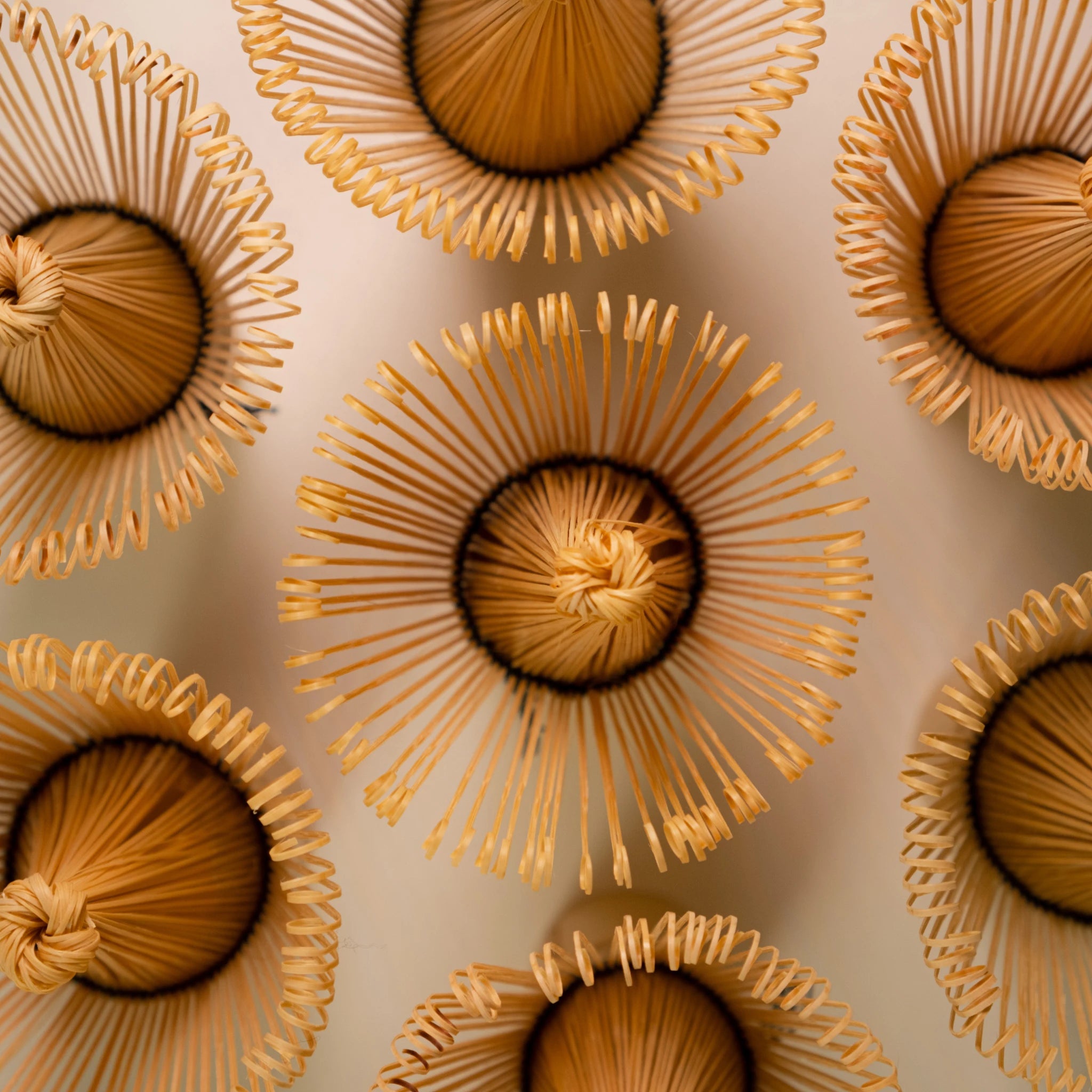
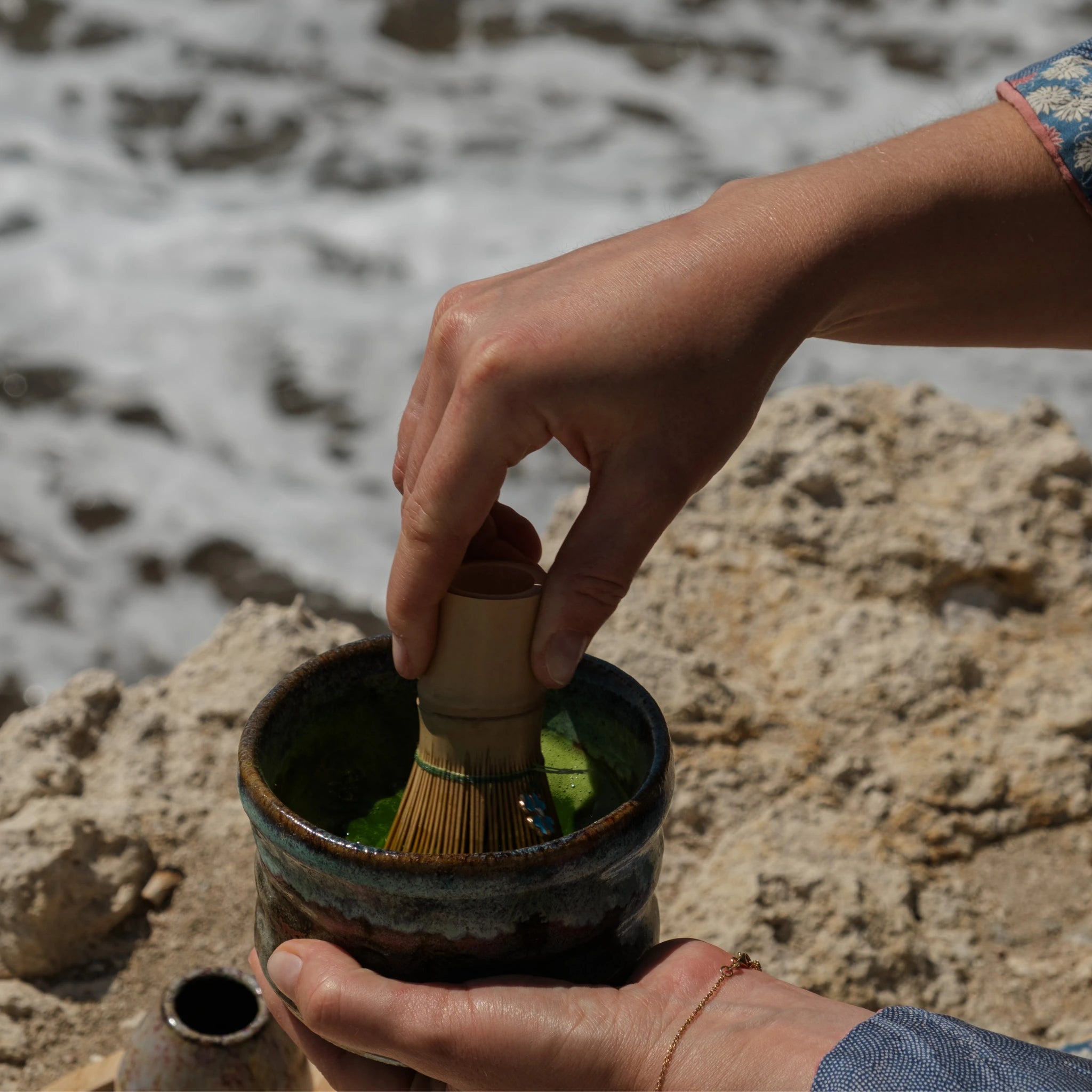
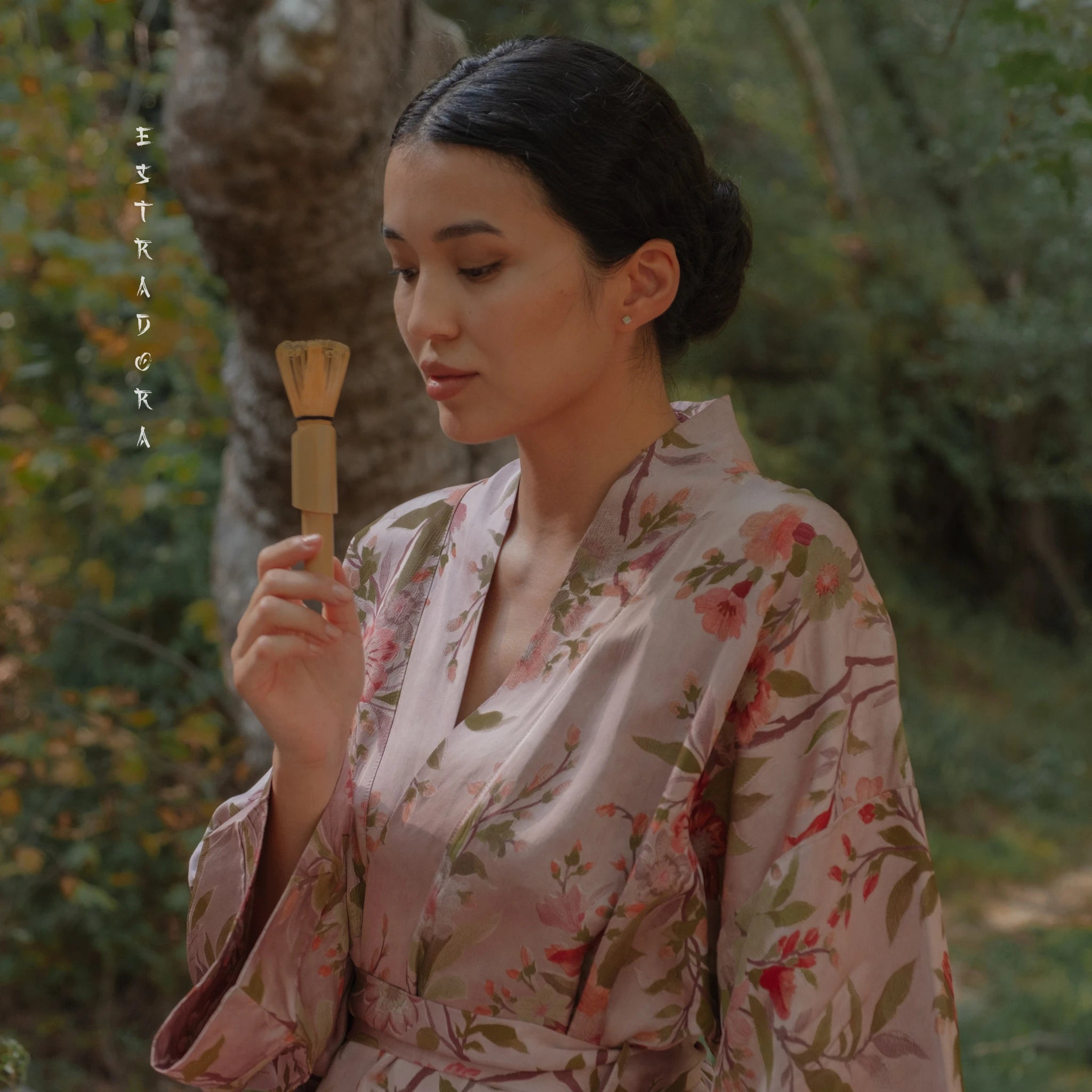
- Chasen* - 100-prong traditional bamboo whisk for creating crema and smooth texture;
- Chashaku - curved bamboo scoop for precise matcha dosing;
- Measuring spoon - ideal for Hojicha and other powdered teas.
Handmade from natural bamboo, this set reflects the craftsmanship of the Japanese tea tradition and ensures proper blending of tea powder with water.
Suitable for:
- Ceremonial Usucha (thin matcha);
- Koicha (thick matcha);
- Matcha & Hojicha lattes;
- Other Estradora tea powders.
Brewing tips:
- 1 serving = 2 g tea powder (≈ 1 flat bamboo spoon or 2 chashaku scoops);
- soak chasen in warm water to soften the bristles before use;
- use only warm water (~70°C for matcha, ~80–90°C for hojicha);
- add powder to bowl, pour in a splash of water, and whisk into paste;
- gradually add the rest of the water and whisk until smooth and frothy.
Care tips:
- hand-rinse without soap after each use;
- always dry chasen on a Whisk Holder to keep its shape and extend its lifespan;
- store all tools in a dry place, away from humidity and direct light.
Storage: Usable up to 2 years under cool, dry conditions.
*due to handmade unique process, the visual characteristics of bamboo whisk may be different from the photo.
Choose options


MATCHA REGION & CULTIVAR

Region
Shizuoka
Shizuoka, Japan’s largest tea-producing region, offers exceptional terroir for premium matcha.
Mineral-rich volcanic soil at the foot of Mount Fuji, combined with mild winters and warm, humid summers, creates ideal conditions for cultivating tencha — the shade-grown leaf used to make matcha.
Ocean breezes from Suruga Bay stabilize temperatures, while morning fog in elevated growing areas like Honyama diffuses sunlight naturally.
Farmers enhance this effect with traditional shading techniques before harvest, boosting chlorophyll and theanine levels while reducing bitterness — the key to matcha’s signature vibrant color and smooth, umami-rich flavor.
With modern processing facilities and generations of expertise, Shizuoka has become a leading source of high-grade matcha, prized by tea makers worldwide for its balance of quality and consistency.

Region
Kyoto
Kyoto, home to Japan’s famed Uji tea district, offers the perfect terroir for premium green tea.
Its warm, humid summers and mild winters create ideal growing conditions for tea plants, while morning mist along the Uji and Kizu rivers filters sunlight — reducing bitterness and boosting umami-rich amino acids like theanine.
Rich, well-drained river valley soil adds essential minerals, and the region’s signature shading technique (ōi-shita saibai) further concentrates flavor and nutrients, producing the deep sweetness prized in Uji matcha and gyokuro.
With over 800 years of tea-growing heritage, Kyoto remains synonymous with Japan’s finest matcha and gyokuro teas.

Cultivar
The difference in our matcha
Every batch of Japanese matcha carries the character of the tea bush it came from: the shape of its leaf, the depth of shade it grew under, the pace of its season. Cultivar sets that character, harvest timing and the stone-mill finish it.
Some ceremonial matcha stays close to the garden: fresh spinach, cut grass, a light floral note. Other cultivars turn smooth and creamy, with a gentle citrus lift. A few build something deeper: pine, sea breeze, ripe melon and apricot, closer to a slow, layered umami than a simple green tea.
The result is a matcha range that moves from light to deep, so there is a matcha powder suited to how you actually drink it, plain in the morning, or folded into milk later in the day.
— per serving · — servings per pack
We recommend 2 g per serving. Fill in the pack price and weight to see your own cost per cup.


